
History of Sri Darbar Sahib Amritsar (The Golden Temple Amritsar)
History of Golden Temple, Darbar Sahib
Who donated land for Sri Darbar Sahib Amritsar (The Golden Temple Amritsar)
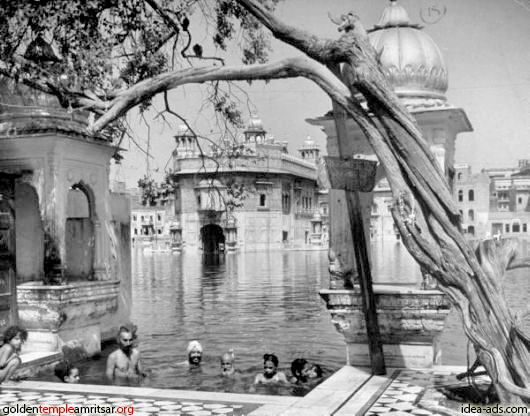
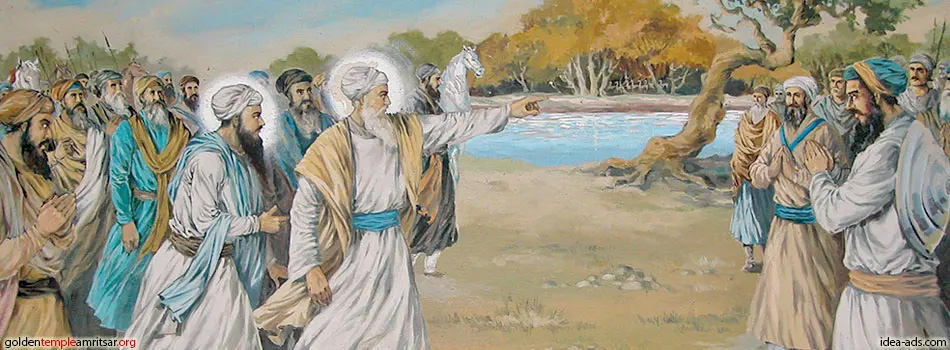
The land for the site was bought by the Guru Ram Das Ji on payment from the Zamindars (landlords) of native villages. Guru Arjan Dev Ji got its foundation laid by a muslim saint Hazrat Mian Mir ji of Lahore on 1st of Magh, 1645 Bikrmi Samvat (December, 1588). The construction work was directly supervised by Guru Arjan Dev Ji himself and he was assisted by the prominent Sikh personalities like Baba Budha ji, Bhai Gurdas ji, Bhai Sahlo ji and many other devoted Sikhs. Unlike erecting the structure on the higher level, Guru Arjan Dev Ji got it built on the lower level and Guru Sahib got it open from four sides. Thus he created a symbol of new faith, Sikhism. Guru Sahib made it accessible to every person without any distinction of Caste, creed, sex and religion. The building work completed in 1601 A.D. on Bhadoon Sudi 1st, 1661 Bikrmi Samvat (August/September,1604). Guru Arjan Dev Ji installed newly created Guru Granth Sahib, in Sri Darbar Sahib Amritsar (The Golden Temple Amritsar) and appointed Baba Budha ji as its first Granthi i.e. the reader of Guru Granth Sahib. After this event it attained the status of ‘Ath Sath Tirath’. Now the SikhNation had their own Tirath, a pilgrimage center. Collection Of Most Rare Pictures Of Golden Temple Sri Darbar Sahib Amritsar (The Golden Temple Amritsar)
Sri Darbar Sahib Amritsar (The Golden Temple Amritsar), is built on a 67ft. square platform in the centre of the Sarovar (tank). The temple itself is 40.5ft. square. It has a door each on the East, West, North and South. The Darshani Deori (an arch) stands at the shore end of the causeway. The door frame of the arch is about 10ft in height and 8ft 6inches in breath. The door panes are decorated with artistic style. It opens on to the causeway or bridge that leads to the main building of Sri Darbar Sahib Amritsar (The Golden Temple Amritsar). It is 202 feet in length and 21 feet in width. The bridge is connected with the 13 feet wide ‘Pardakshna’ (circumambulatory path). It runs round the main shrine and it leads to the ‘Har ki Paure’ (steps of God). On the first floor of “Har Ki Pauri”, there is continuous reading of Guru Granth Sahib.
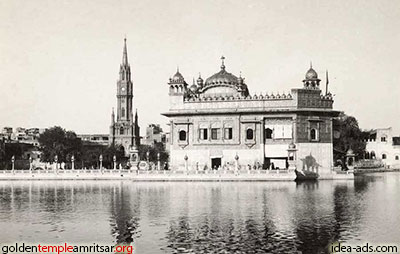
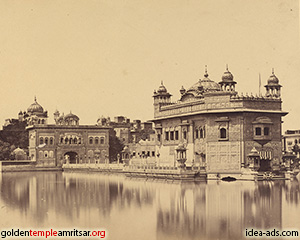
The main structure of Sri Darbar Sahib Amritsar (The Golden Temple Amritsar), functionally as well as technically is a three-storied one. The front, which faces the bridge, is decorated with repeated cusped arches and the roof of the first floor is at the height of the 26 feet and 9 inches. At the top of the first floor 4 feet high parapet rises on all the sides which has also four ‘Mamtees’ on the four corners and exactly on the top of the central hall of the main sanctuary rises the third story. It is a small square room and have three gates. A regular recitation of Guru Granth Sahib is also held there. On the top of this room stands the low fluted ‘Gumbaz’ (dome) having lotus petal motif in relief at the base inverted lotus at the top which supports the “Kalash” having a beautiful “Chhatri” at the end. Its architecture considered the best architectural specimens of the world. It is often quoted that this architecture has created an independent Sikh school of architecture in the history of art in India.
Foundation by Guru Ram Das Ji: The foundation of Sri Darbar Sahib Amritsar (The Golden Temple Amritsar) was laid by Guru Ram Das Ji, the fourth Sikh Guru, in 1577. The site chosen for the temple was in the midst of a small lake, which was later expanded to become the Amrit Sarovar (Pool of Nectar). Guru Ram Das Ji initiated the excavation of the Sarovar and the construction of the Gurudwara complex.
Construction by Guru Arjan Dev Ji: The construction of the Gurudwara itself was overseen by Guru Arjan Dev Ji, the fifth Sikh Guru, and was completed in 1604. Guru Arjan Dev Ji also compiled the Guru Granth Sahib, the holy scripture of Sikhism, and installed it in Sri Darbar Sahib Amritsar (The Golden Temple Amritsar). This act solidified the Gurudwara’s significance as the central place of worship for Sikhs.
Architectural Features: The Gurudwara is built on a lower level, accessible via a flight of steps, surrounded by the Amrit Sarovar. It has four entrances, symbolizing the openness of Sikhism to people of all castes and backgrounds.
Spiritual Significance: Sri Darbar Sahib Amritsar (The Golden Temple Amritsar) is considered the holiest shrine in Sikhism. It is not only a place of worship but also a symbol of Sikh values such as equality, service, and community. The central shrine, Darbar Sahib, is adorned with gold plating, giving rise to the popular name “Golden Temple.”
Mughal Era and Early Attacks (17th-18th Centuries):
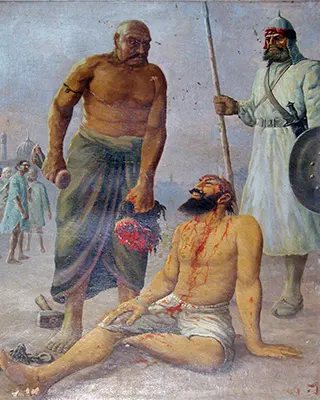
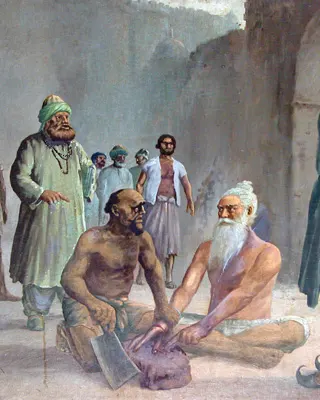
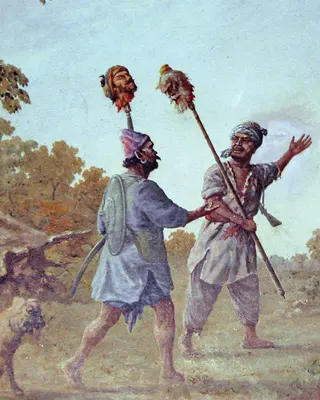
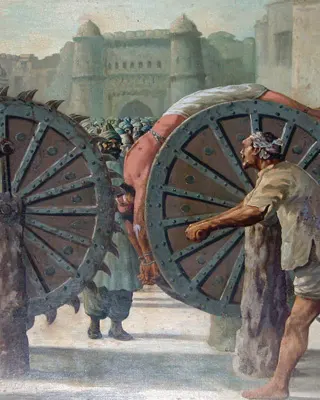
The early 17th century saw some Mughal emperors like Jahangir appreciate the growing Sikh center. However, later Mughal rulers like Aurangzeb viewed Sikhs as a threat and targeted the Gurudwara. Sri Darbar Sahib Amritsar (The Golden Temple Amritsar) was damaged multiple times during Afghan invasions in the 18th century. One of the most tragic incidents was the Operation Blue Star in June 1984. The Indian Army conducted a military operation to flush out Sikh militants who had fortified themselves inside the Gurudwara complex. The operation resulted in significant damage to the Gurudwara and loss of lives, including civilians.